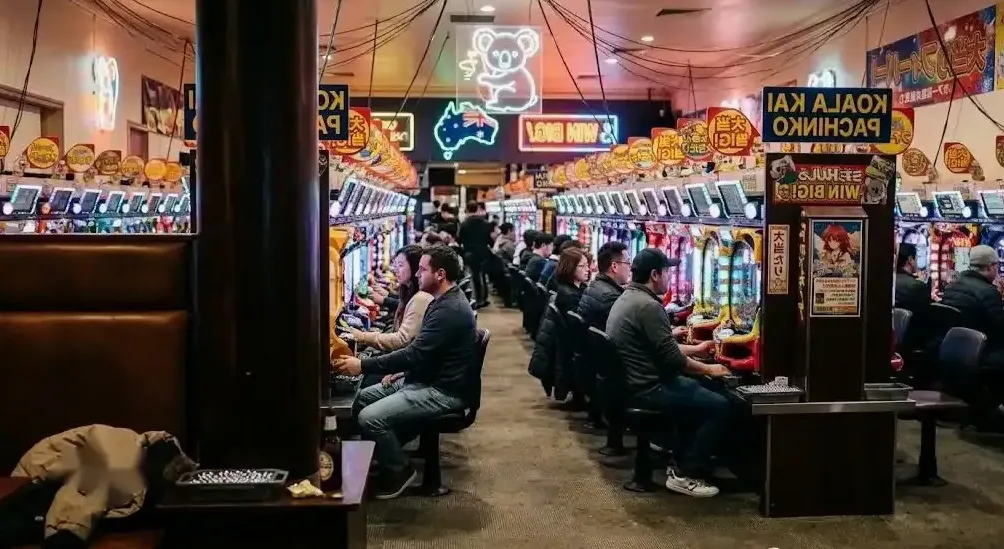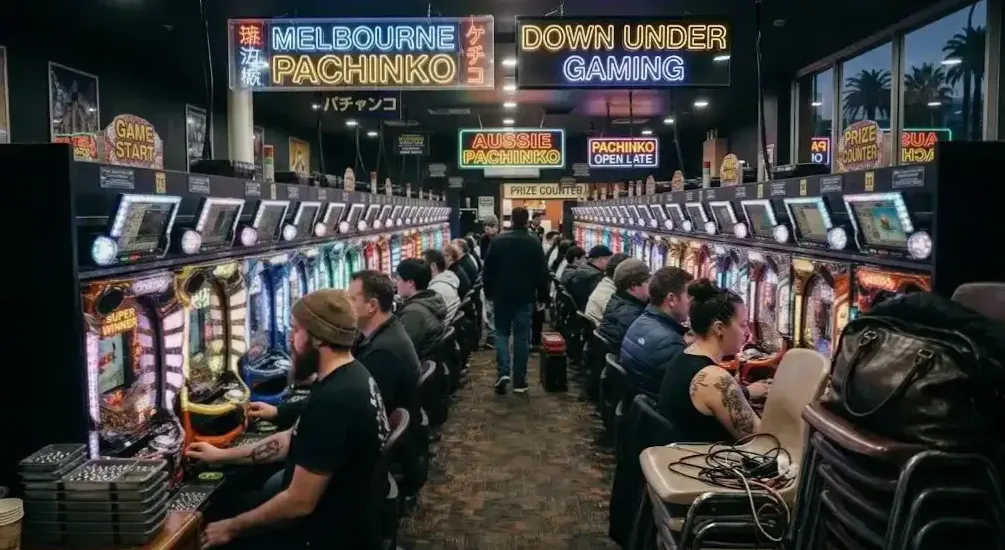

A pachinko machine looks like the lovechild of a pinball table and a slot machine, but the mechanism underneath is almost embarrassingly mechanical. Understanding the hardware is the fastest way to stop playing blind.
The dial and the ball launcher
The twist dial at lower right controls a small launcher that fires steel balls to the top of the play field. Turn it slightly and balls dribble out slowly; turn it further and they hit the top rail with pace. The position you hold determines the arc every ball takes into the nail field. This is why experienced players hunt for one precise dial spot and hold it: the machine rewards repeatable trajectories, not random firing.
The nail field
Hundreds of brass pins cover the play area. Balls bounce through them on the way down, and their arrangement, set by technicians, decides whether the machine plays tight or loose that day. Two visually identical machines can have completely different personalities because the nails are bent a fraction differently. Our floor calibrates the tournament row every Friday morning for exactly this reason.
Pockets, tulips and the centre feature
The start pocket sits near centre field. When a ball drops in, it triggers the digital reels on the screen. Line up a winning combination and the machine opens the payout pockets, those are the tulips that fans open and close at the bottom of the field. Each ball that lands in a payout pocket returns a stack of balls to your tray. That returned stack is where sessions are won.


Variance and machine classes
Machines are designed for different payout rhythms. Low-variance units pay small bonuses frequently, good for long relaxed sessions. High-variance units, like our jackpot challenge row, go quiet for stretches and then dump enormous payouts. Neither is better; they are different moods, and matching the machine to your evening is a real skill.
What the counter sees
When you finish, your tray feeds into a counting machine that reads the exact ball count and prints a receipt. That count is what you take to the bounty counter for redemption, or bank on a member card. Nothing is estimated, which is why the receipt matters.
Reading a machine on the floor
Regulars glance at a unit and see information everywhere: nail wear, pocket animation speed, the recent payout display. New players can learn most of this in a single masterclass session, and it changes how the whole floor looks afterward.
Key takeaways
- The dial controls launch speed; one held position beats constant adjustment.
- Nail arrangements, set by technicians, decide whether a machine plays tight or loose.
- Bonus rounds open the tulip pockets that fill your tray.
- Choose machine variance to match your session mood, not just the flashiest cabinet.
The screen is theatre. The nails are the truth.
Asked about this topic
Quick answers related to this article. For the full club FAQ, head to our help centre.
Visit Help CentreNo. Nail arrangements are calibrated for a target variance, but every ball bounces physically through the field. Nothing is decided digitally after launch.
You can read whether it is playing loose or tight, not whether the next ball wins. Bonus sequences are still chance events on physical ball paths.
Nail positions vary by fractions of a millimetre and wear over weeks of play. Floor technicians recalibrate regularly, but the variance between units is real.